
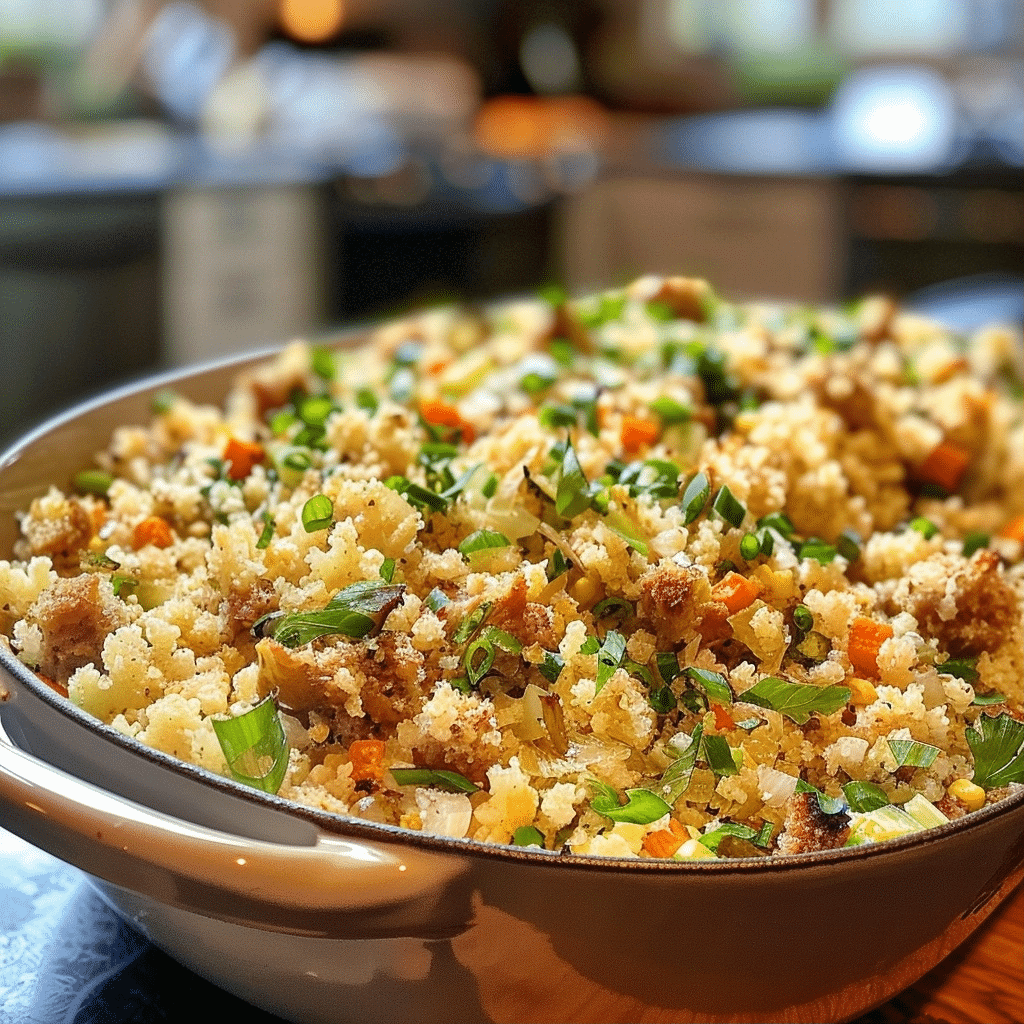
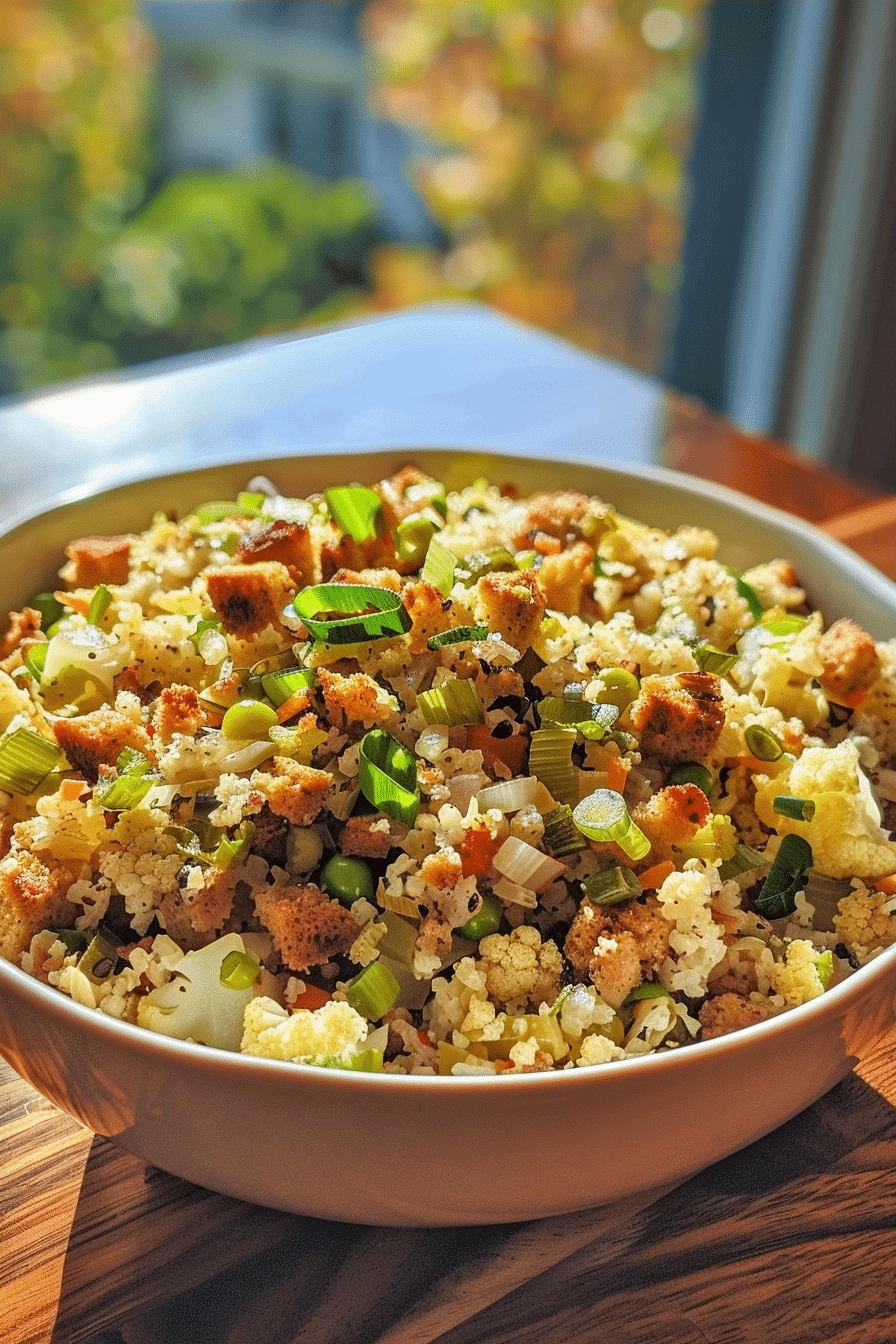
Cauliflower rice stuffing serves as a nutrient-dense, low-carb alternative to traditional bread-based holiday side dishes while maintaining a rich, savory profile. This recipe utilizes riced cauliflower, aromatic vegetables, and fresh herbs to mimic the texture and flavor of classic stuffing without using wheat or heavy grains. It provides a satisfying experience for health-conscious diners during festive meals or cozy weeknight dinners.
Recipe Overview
| Property | Details |
|---|---|
| Prep Time | 15 minutes |
| Cook Time | 20 minutes |
| Total Time | 35 minutes |
| Servings | 6 servings |
| Difficulty | Easy |
| Cuisine | Modern American |
Why This Recipe Works
This dish succeeds because riced cauliflower mimics the crumbly texture of bread stuffing when cooked correctly. By sautéing the cauliflower in a flavorful base of onions, celery, and garlic, you infuse every bite with deep, savory notes. The addition of toasted nuts and fresh herbs creates the complexity that diners expect from a traditional stuffing recipe.
I personally rely on this recipe because it accommodates various dietary needs without sacrificing the nostalgic taste of Thanksgiving sides. The cauliflower absorbs moisture from the vegetable broth perfectly, ensuring the dish remains moist rather than mushy. It saves significant time in the kitchen compared to drying out bread cubes in an oven for hours.
Ingredients
| Ingredient | Quantity | Notes |
|---|---|---|
| Cauliflower | 1 large head | Use fresh riced florets |
| Onion | 1 medium | Yellow or white, finely diced |
| Celery | 3 stalks | Diced small |
| Vegetable Broth | 0.5 cup | Use high-quality low-sodium |
| Olive Oil | 2 tablespoons | Extra virgin variety |
| Fresh Sage | 1 tablespoon | Finely chopped |
| Fresh Thyme | 1 teaspoon | Leaves only |
| Walnuts | 0.5 cup | Toasted and chopped |
| Salt and Pepper | To taste | Adjust based on personal preference |
Step-by-Step Instructions
Preparing the Base
- Process the cauliflower florets in a food processor until they reach a rice-like consistency.
- Heat the olive oil in a large skillet over medium heat.
- Sauté the onions and celery until they reach a translucent stage, roughly 5 minutes.
Cooking the Stuffing
- Add the riced cauliflower to the skillet and stir well to combine with the aromatics.
- Pour in the vegetable broth to provide moisture and steam the cauliflower slightly.
- Cook the mixture for 8-10 minutes, stirring occasionally, until the cauliflower softens but retains a slight bite.
- Stir in the fresh sage, thyme, toasted walnuts, salt, and pepper just before removing the skillet from heat.
Chef Tips for Perfect Results
- Remove excess moisture from the riced cauliflower using a clean kitchen towel to prevent a soggy final dish.
- Toast the walnuts in a dry pan for three minutes to unlock a deeper, nuttier flavor profile.
- Keep the cauliflower chunks uniform in size to ensure they cook evenly throughout the process.
- Use fresh herbs instead of dried varieties to maximize the aromatic qualities of the stuffing.
- Avoid overcooking the cauliflower, as it loses its structure and turns into mush very quickly.
Common Mistakes to Avoid
- Processing the cauliflower too much leads to a puree instead of a rice-like texture; pulse the food processor briefly to maintain texture.
- Adding too much broth creates a soup rather than a stuffing; start with a small amount and add more only if necessary.
- Ignoring the need for salt leaves the dish tasting bland; season the aromatics early to build a base layer of flavor.
- Crowding the skillet prevents proper browning of the vegetables; use a wide pan to allow space for moisture to evaporate.
Variations and Substitutions
| Ingredient | Substitution | Impact on Flavor |
|---|---|---|
| Walnuts | Pecans | Adds a slightly sweeter, buttery note |
| Sage | Rosemary | Creates a piney, more intense herbal profile |
| Olive Oil | Ghee | Provides a richer, closer-to-butter flavor |
| Vegetable Broth | Mushroom Broth | Deepens the savory umami quality |
Serving Suggestions and Pairings
Serve this dish alongside roasted turkey or a balsamic-glazed beef roast for a complete meal. It works perfectly for Thanksgiving dinners or holiday gatherings where guests prefer lighter, grain-free options. Complement the savory herbs by serving it with a side of cranberry sauce or roasted root vegetables.
Storage and Reheating
| Method | Duration | Instructions |
|---|---|---|
| Refrigerator | 3-4 days | Keep in an airtight glass container |
| Stovetop | 5 minutes | Reheat on medium heat with a splash of water |
| Microwave | 2 minutes | Use a microwave-safe bowl and cover loosely |
Nutritional Information
| Nutrient | Amount per Serving |
|---|---|
| Calories | 120 kcal |
| Protein | 4g |
| Fat | 8g |
| Carbohydrates | 9g |
| Fiber | 4g |
Approximate values.
Frequently Asked Questions
Can I prepare cauliflower rice stuffing ahead of time?
You can prepare the vegetable base and riced cauliflower up to one day in advance. Store them separately in the refrigerator and combine them during the final cooking process for the best texture.
Is cauliflower rice stuffing suitable for a low-carb diet?
This dish is naturally low in carbohydrates and fits well within a keto or paleo lifestyle. The fiber content helps maintain steady energy levels throughout your meal.
How do I fix watery stuffing?
You fix watery stuffing by increasing the heat and allowing the liquid to evaporate. Cook the mixture uncovered for a few extra minutes until the moisture level reaches your preference.
What can I use if I am allergic to nuts?
You can substitute toasted sunflower seeds or pumpkin seeds for the walnuts. These alternatives provide a similar crunch and healthy fat profile without the allergen risk.
How do I know when the cauliflower is done?
The cauliflower is done when it feels tender but still holds its shape under gentle pressure. A fork should pierce it easily without the vegetable falling apart into a mushy consistency.
Conclusion
Cauliflower rice stuffing offers a brilliant way to enjoy festive traditions while maintaining your health goals. By focusing on fresh ingredients and proper heat management, you create a side dish that impresses every guest at your table. Embrace this versatile recipe for your next gathering and enjoy the savory, herbal notes that define this healthier classic. Your kitchen will smell like the holidays without the heavy aftermath of traditional bread stuffings.
Print
Cauliflower Rice Stuffing
- Total Time: 35
- Yield: 6 servings 1x
- Diet: Vegan, Gluten-Free, Low-Carb
Description
A nutrient-dense, low-carb alternative to traditional holiday stuffing. This savory side dish uses riced cauliflower sautéed with aromatic onions, celery, and fresh herbs to mimic the texture of bread stuffing. It is a satisfying, gluten-free, and grain-free addition to any festive meal that saves prep time while keeping the nostalgic, cozy flavors of Thanksgiving.
Ingredients
1 large head cauliflower, riced
1 medium onion, finely diced
3 stalks celery, diced
0.5 cup vegetable broth
2 tablespoons extra virgin olive oil
1 tablespoon fresh sage, chopped
1 teaspoon fresh thyme leaves
0.5 cup walnuts, toasted and chopped
Salt and pepper to taste
Instructions
Process the cauliflower florets in a food processor until they reach a rice-like consistency.
Heat the olive oil in a large skillet over medium heat.
Add the onions and celery and sauté until translucent, about 5 minutes.
Add the riced cauliflower to the skillet and stir well to combine.
Pour in the vegetable broth and cook until the cauliflower is tender and the liquid has evaporated.
Stir in the fresh sage, thyme, and chopped walnuts.
Season with salt and pepper to taste before serving.
Notes
Ensure you do not overcook the cauliflower to maintain a light, fluffy texture rather than mushy. You can swap walnuts for pecans if preferred, or add dried cranberries for a touch of sweetness.
- Prep Time: 15
- Cook Time: 20
- Category: Recipes
- Method: Stovetop
- Cuisine: Modern American
Nutrition
- Serving Size: 1 cup
- Calories: 110
- Sugar: 3g
- Sodium: 250mg
- Fat: 7g
- Saturated Fat: 1g
- Carbohydrates: 9g
- Fiber: 3g
- Protein: 3g
- Cholesterol: 0mg